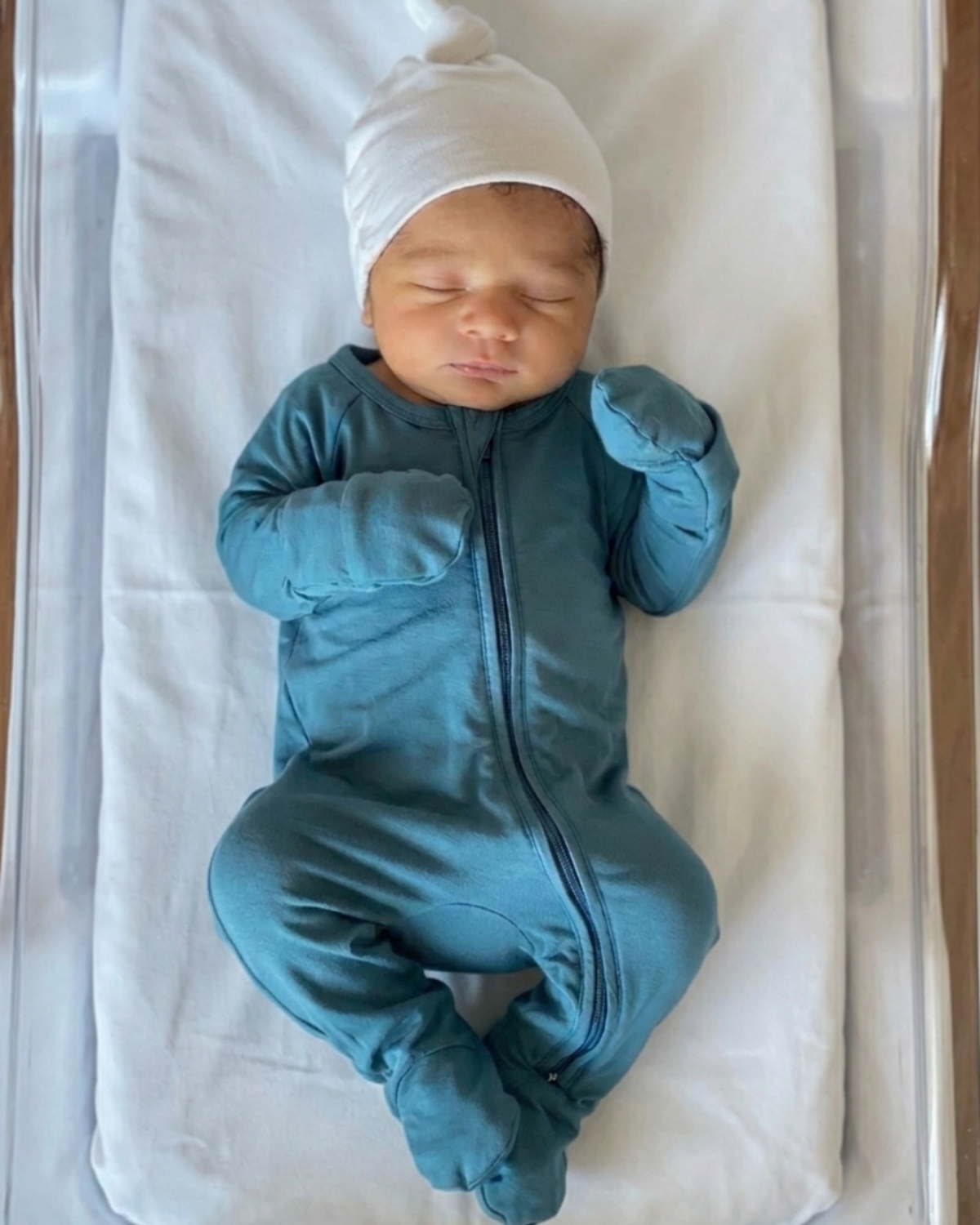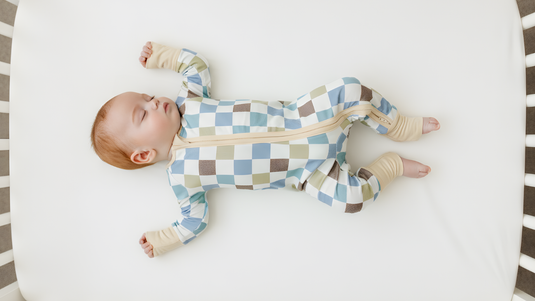
The early days with a newborn are tender, exhausting, and often unpredictable. Especially when it comes to sleep.
Many new parents find themselves wondering in the middle of the night: Is my baby too hot? Too cold? Am I doing this right?
What your baby wears to sleep can make a meaningful difference in how comfortable they feel, and how easily everyone settles back down.
Dress your baby too lightly, and they may wake from being cold. Too warmly, and you risk overheating, which pediatric experts identify as an important safety concern.
There isn’t one perfect outfit for every baby. Instead, the goal is to create a safe, calming sleep environment with breathable layers that help your baby feel secure and comfortable through the night.
What Should a Baby Wear to Sleep?
Most babies sleep best in lightweight, breathable clothing and no more than one additional layer than an adult would wear in the same room. Pediatric experts recommend keeping the sleep environment comfortable for a lightly clothed adult and avoiding overheating.
A simple sleeper, with or without a swaddle or sleep sack depending on age and preference, is often enough to keep baby comfortable without unnecessary complexity.
Parents looking for a calm, easy nighttime routine often choose all-in-one options like footed pajamas or sleepers designed specifically for overnight comfort, such as bamboo baby sleepers that combine softness with breathability.
Why What Your Baby Wears to Sleep Matters
Babies cannot regulate their body temperature as efficiently as adults. That means they rely on caregivers to help maintain a comfortable environment while they sleep.
Overheating has been associated with increased sleep risk, while being too cold can lead to restlessness, difficulty settling, and frequent waking. The goal isn’t to make baby “warm”, it’s to keep them comfortably regulated.
Comfortable sleepwear is one small but meaningful part of creating a safe sleep space, along with a firm mattress and an uncluttered crib.
For many parents, simplifying this part of the bedtime routine can reduce stress during already demanding nights.
How Many Layers Should a Baby Wear to Sleep?
A common guideline is to dress babies in no more than one extra layer than an adult would wear to sleep comfortably in the same environment.
Too many layers can increase the risk of overheating, while too few may leave baby uncomfortable and restless.
Because room temperatures can change throughout the night, many parents prefer sleepwear that remains comfortable across conditions rather than needing frequent adjustments.
General Guidelines for Dressing Your Newborn for Sleep
Instead of focusing on exact temperatures or perfect formulas, focus on overall comfort and safety.
✔ Start with a Comfortable Room
The American Academy of Pediatrics advises keeping the sleep environment at a temperature comfortable for a lightly clothed adult, which is typically around 68–72°F (20–22°C).
If the room feels comfortable to you, it’s likely appropriate for your baby as well.
✔ Use the “One Extra Layer” Rule
Dress your baby in no more than one additional layer than you would wear to sleep.
For example:
- If you’re comfortable in pajamas, baby may wear a sleeper
- If you’re comfortable under a light blanket, baby may wear a sleeper plus a swaddle or sleep sack
Avoid heavy bundling or multiple thick layers.
✔ Choose Breathable, Soft Fabrics
Fabric can make a noticeable difference in how comfortable babies feel throughout the night. Materials that allow airflow without trapping heat help reduce temperature swings and skin irritation, both of which can disrupt sleep.
Fabrics like bamboo have become increasingly popular because they feel gentle against sensitive skin while remaining comfortable across seasons. Cozy enough for cooler nights yet breathable enough for warmer rooms, reducing the need for separate sleepwear as temperatures change. Many parents choose bamboo baby pajamas made from bamboo fabric to help keep their baby comfortable through the night..
Soft, stretchy sleepers can also make nighttime diaper changes quicker and easier, helping preserve a calm atmosphere when everyone is half-awake.

How to Tell If Your Baby Is Too Hot or Too Cold at Night
Babies cannot regulate body temperature well, so caregivers must watch for physical signs of discomfort.
Some potential signs baby may be too warm:
- Sweaty hair, neck, or chest
- Flushed cheeks
- Rapid breathing
- Damp clothing
- Restlessness
Some potential signs baby may be too cool:
- Cool chest or back
- Fussiness or difficulty settling
- Frequent waking
Experts recommend checking your baby’s torso rather than hands or feet, which are often naturally cooler.
How Should a Newborn Be Dressed for Sleep?
Newborns often need slightly more help staying comfortable, especially during the first weeks of life when their ability to regulate temperature is still developing.
Safe options may include:
- A long-sleeve sleeper
- A soft, breathable stretchy swaddle blanket (when appropriate and used correctly)
- Soft, breathable sleepwear-approved layers that allow comfortable movement
Always follow current safe sleep recommendations and discontinue swaddling when your baby shows signs of rolling. Loose blankets, pillows, or extra bedding should not be placed in the sleep space.
Choosing simple, easy-to-use sleepwear can help make middle-of-the-night care feel a little more manageable during an already intense stage of parenthood.
Should Babies Wear Hats to Sleep?
Babies generally should not wear hats while sleeping indoors, as hats can contribute to overheating and may slip over the face.
Footed sleepers or appropriate layers usually provide enough warmth without additional head coverings.
How to Adjust for Seasonal Changes
Rather than switching to dramatically heavier or lighter clothing, adjust gradually as temperatures shift.
Warm weather
- Lightweight sleeper or onesie
- Minimal layering
- Focus on breathable fabrics
Cooler weather
- Long-sleeve sleeper
- Optional swaddle or sleep sack
- Ensure the room is not excessively cold
Avoid heavy blankets or thick comforters, which are not recommended for infant sleep.
Expert Insight: Why Sleep Matters for Development
Pediatric developmental specialist Alexis Riffle, CEO of Northstar Pediatrics, emphasizes that sleep plays a vital role in a baby’s growth and development.
“Sleep isn’t just about rest. It’s when a baby’s brain processes new experiences, builds connections, and supports physical growth,” she explains. “Creating a comfortable, consistent sleep environment can help babies settle more easily and support healthy development over time.”
For parents navigating the early weeks, small steps that promote comfort and consistency can make a meaningful difference.
The Role of Sleepwear in Better Nights
Sleepwear alone won’t solve every sleep challenge, newborn sleep is naturally irregular, but comfortable clothing can remove one common source of disruption.
Soft, non-restrictive fabrics allow babies to move naturally, settle more easily, and stay comfortable through normal temperature changes.
A Simple Checklist for Safe Baby Sleepwear
Before putting your baby down for the night, consider:
✔ Is the room comfortable for a lightly clothed adult?
✔ Is baby wearing only one additional layer?
✔ Are fabrics soft and breathable?
✔ Is the sleep space free of loose bedding?
✔ Does baby feel warm but not sweaty?
If yes, you’re likely on the right track.
Final Thoughts
There isn’t one perfect sleep outfit for every baby, especially in the early days when everything feels new.
Focus on:
- Comfortable room temperature
- Light layering
- Breathable fabrics
- Monitoring your baby’s cues
- Following safe sleep recommendations
When babies feel comfortable and secure, nights often become a little easier and parents can rest a bit more too.
If you have concerns about your baby’s sleep, comfort, or development, consult your pediatrician for guidance tailored to your child’s individual needs.
Choosing soft, comfortable sleepwear designed with gentle materials can help support calmer nights for both baby and parent during the earliest months.